AI agents are only as good as the tools they can reach
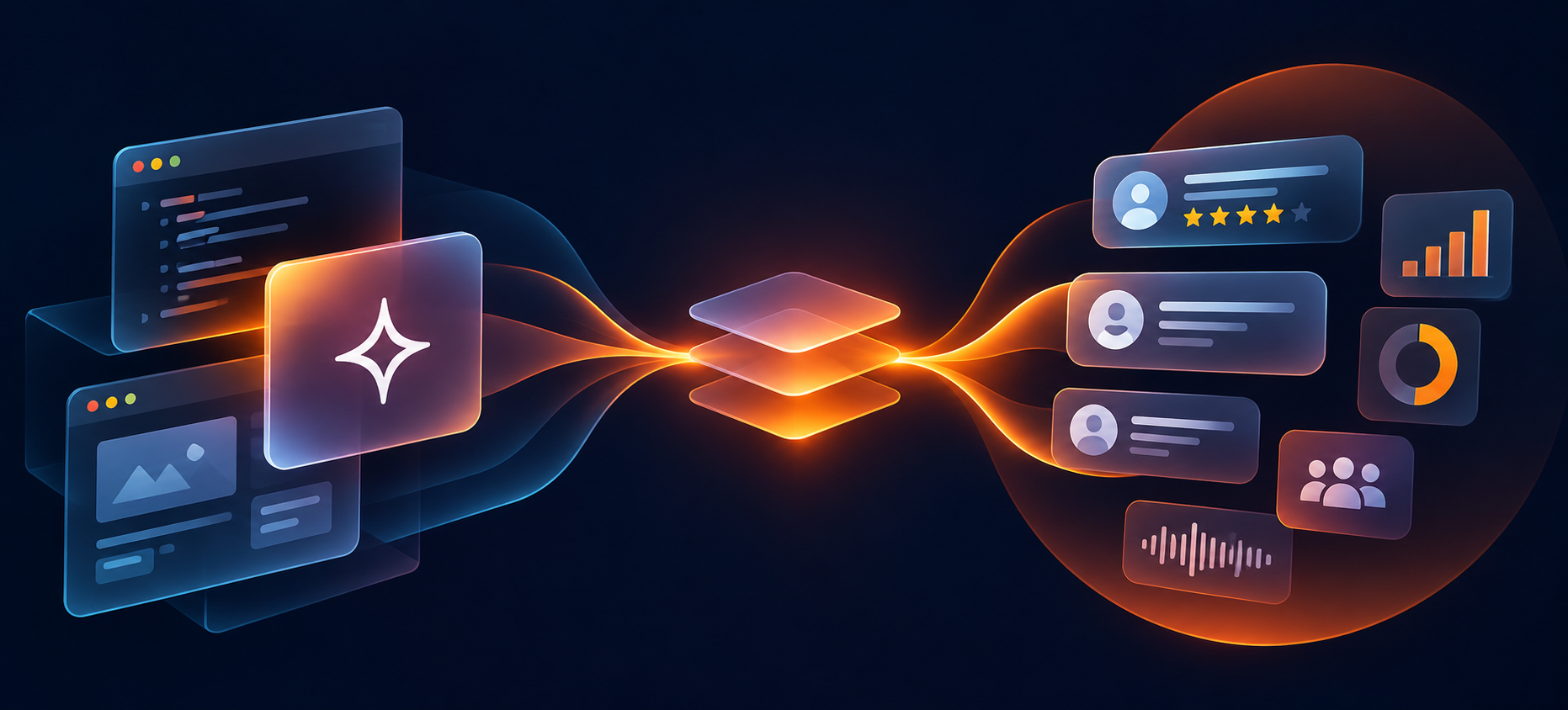
AI agents are getting faster at building products. But are they helping companies build better ones?
That's the question Jennifer Artabane, SVP of Product Management at Auros, explores in a new article for the Forbes Technology Council, “AI Agents Are Only As Good As The Tools They Can Reach.”
As AI accelerates software development, product teams are discovering a growing imbalance. They can generate prototypes, write code and ship features faster than ever. But the processes for gathering customer feedback, validating ideas and understanding whether those features actually solve problems haven't kept pace.
The result? Companies risk building the wrong things faster.
The missing half of AI-powered development
Artabane argues that the next opportunity for AI agents isn't simply making development more efficient. It's connecting agents directly to the customer insights that inform what gets built.
Traditionally, customer research happens in a separate workflow. Teams conduct studies, analyze findings and eventually bring those insights back into product development. That separation creates delays, particularly when AI agents can complete development tasks in hours rather than weeks.
The Model Context Protocol (MCP) offers a way to close that gap.
By giving AI agents access to research tools, customer feedback and existing insights, companies can make human understanding part of the development process rather than something that happens after the fact.
Artabane describes how Auros worked with Zigzag to develop an AI chat feature that incorporated customer feedback throughout development. The result was a feature informed by real customer needs, with feedback helping guide decisions as the product took shape.
Keeping humans in the loop
Connecting AI agents to research tools doesn't mean removing people from the process.
Quite the opposite.
Artabane emphasizes that human feedback remains essential, particularly when AI-generated solutions appear convincing but haven't been validated with actual customers.
Product teams need to establish when agents should seek customer input, who decides whether that feedback is sufficient and how quickly the organization can turn what it learns into better products.
The distinction matters. Development speed measures how quickly something gets built. Learning speed measures how quickly a company discovers whether it should have built it in the first place.
As AI agents become more capable, the organizations that succeed won't necessarily be those shipping the most features. They'll be the ones connecting that speed to meaningful customer understanding.
Read Jennifer Artabane's full article in the Forbes Technology Council: AI Agents Are Only As Good As The Tools They Can Reach.